Learning Environments
Muhlenberg’s beautiful, residential campus is home to state-of-the-art facilities for students across disciplines.
Our Learning Environments
Fahy Commons
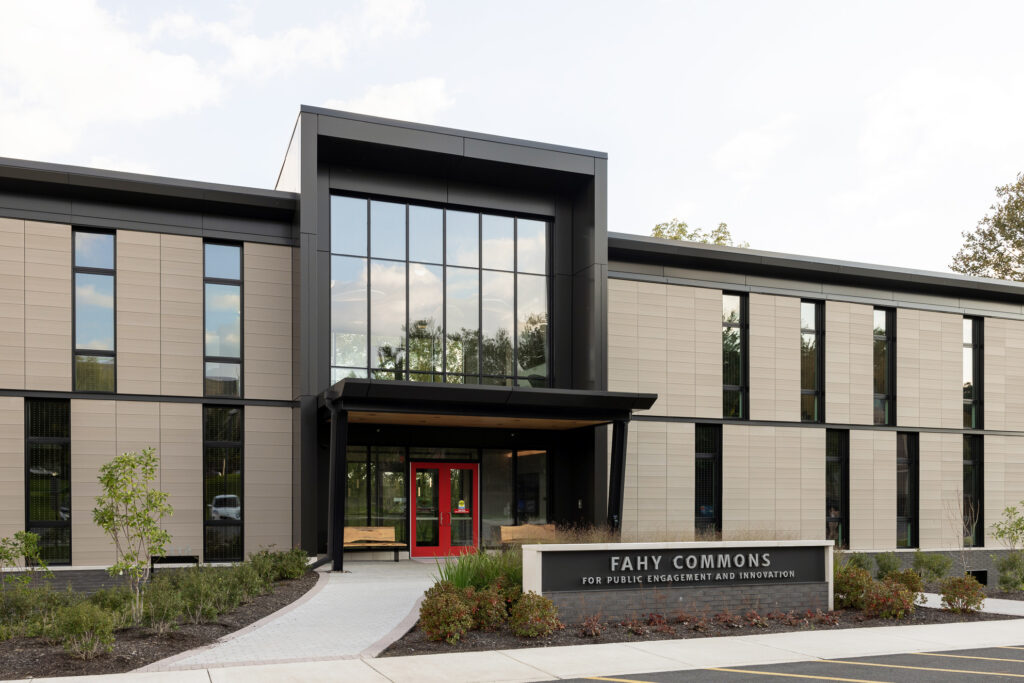
Muhlenberg’s newest academic building, The Fahy Commons for Public Engagement and Innovation, provides 20,000 square feet of programming, art studio, and academic space. In addition to being LEED Platinum certified, it is the world’s first Living Building Challenge Core-certified structure. It’s home to the Office of Community Engagement, the innovation and entrepreneurship program, the Makerspace, the Division of Graduate and Continuing Education, the Office of Religious and Spiritual Life, and the Institute of Public Opinion.
Baker Center for the Arts
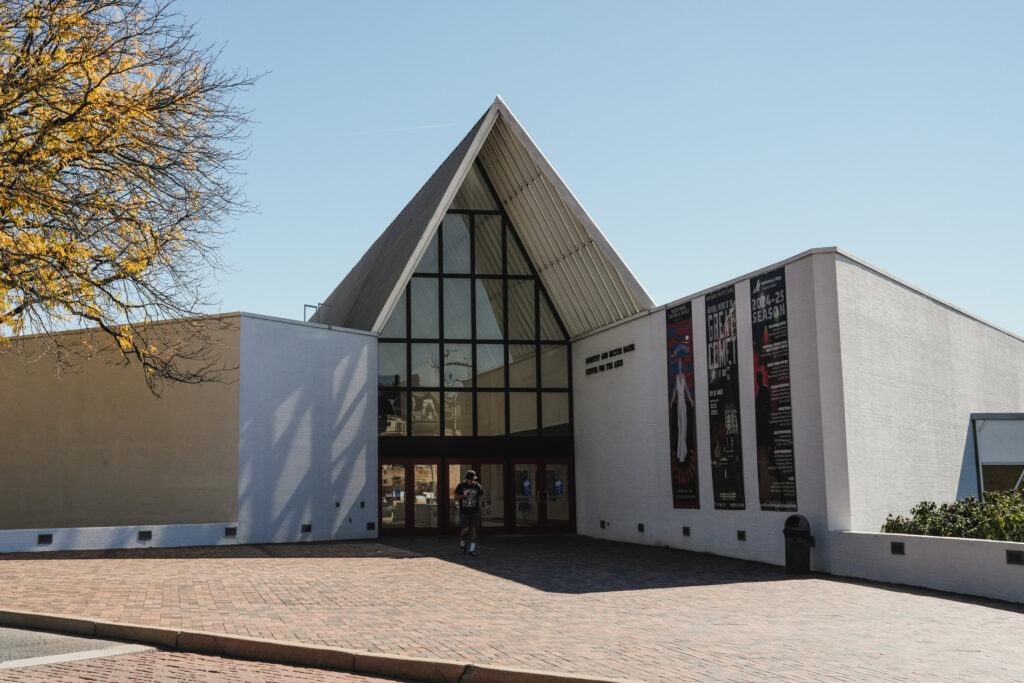
The state-of-the-art studios, shops, classrooms, and performance spaces, large and small, in the Dorothy and Dexter Baker Center for the Arts (CA) are part of what shapes the Muhlenberg experience. The art, English, music, theatre, and dance departments are housed here. The CA was built in 1976; Trexler Pavilion was added in 1999.
Ettinger Building
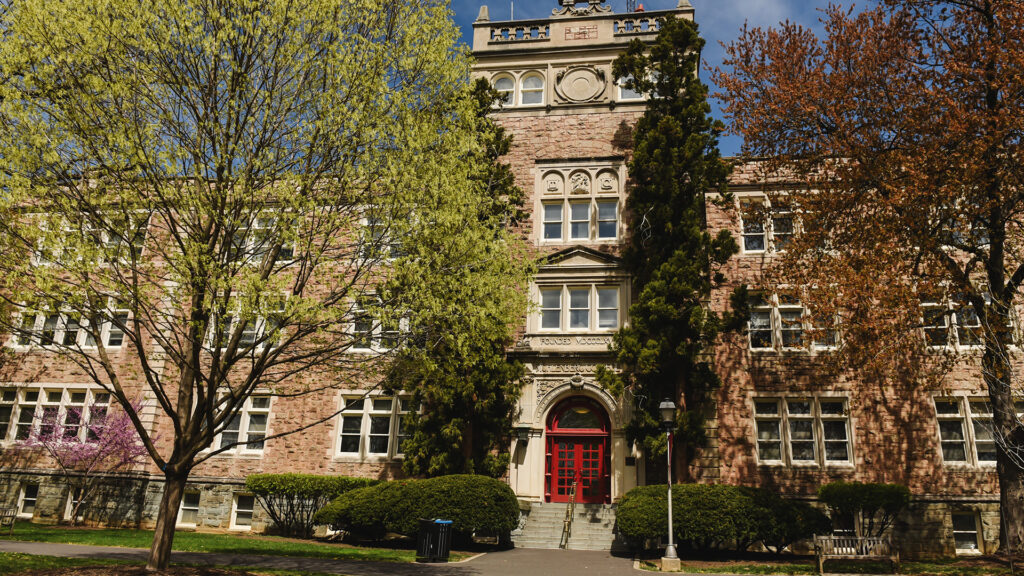
The George T. Ettinger Building, constructed in 1904, houses four departments: accounting, business, economics, and finance (ABEF); languages, literatures, and cultures; history; and political science. The Office of Information Technology can be found on the lower level. Ettinger contains a state-of-the-art Finance Lab, renovated in 2024.
Moyer Hall
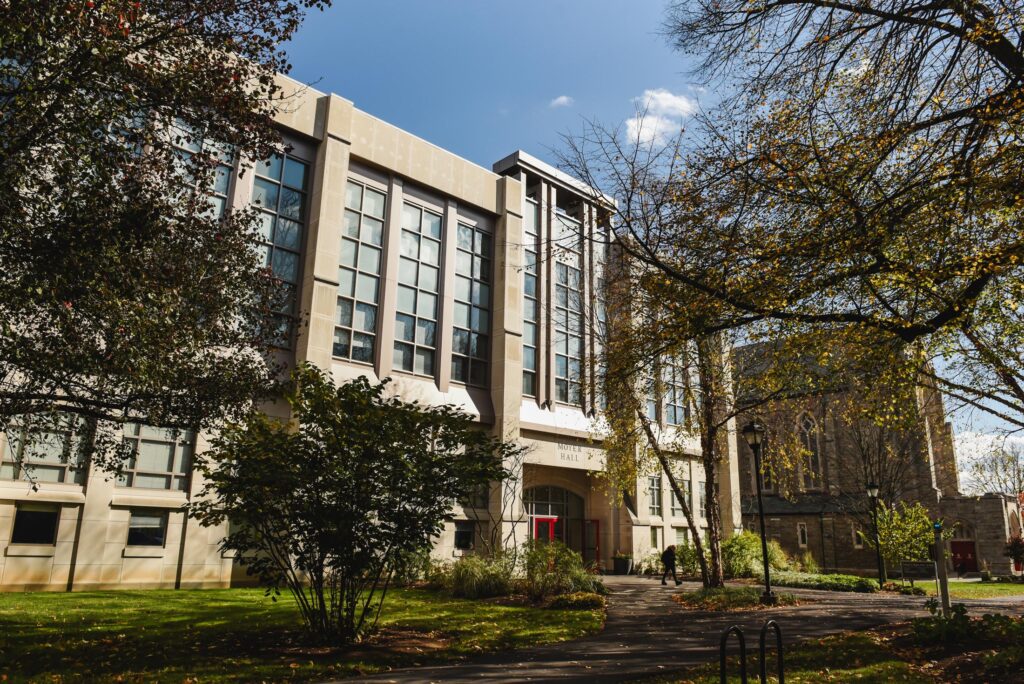
Forrest G. Moyer, M.D., ’35 Hall, which houses the psychology, education, philosophy, and religion studies departments, features state-of-the-art classrooms and lab spaces. It also contains Miller Forum, a large space that frequently accommodates guest lecturers and other public events, as well as the Institute for Religious and Cultural Understanding. Moyer Hall was built in 2000.
New Science and Shankweiler Buildings
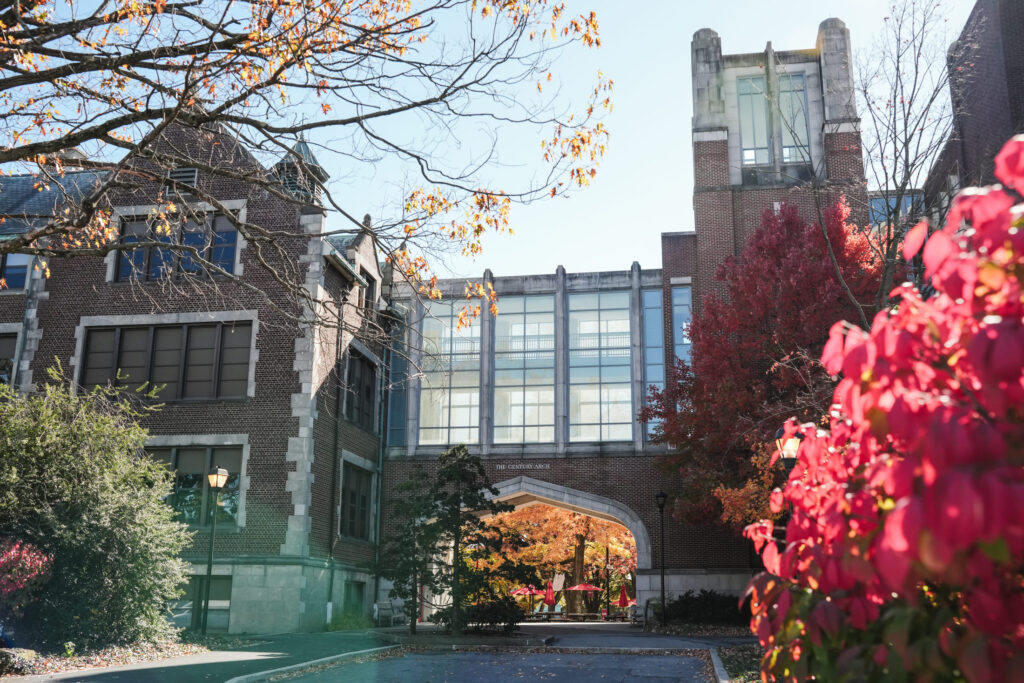
The connected John V. Shankweiler Building (built in 1970) and New Science Building (completed in 2006) together house the biology and neuroscience departments, the biochemistry and sustainability studies programs, significant laboratory space, and the Acopian Center for Ornithology.
Trumbower Science Building
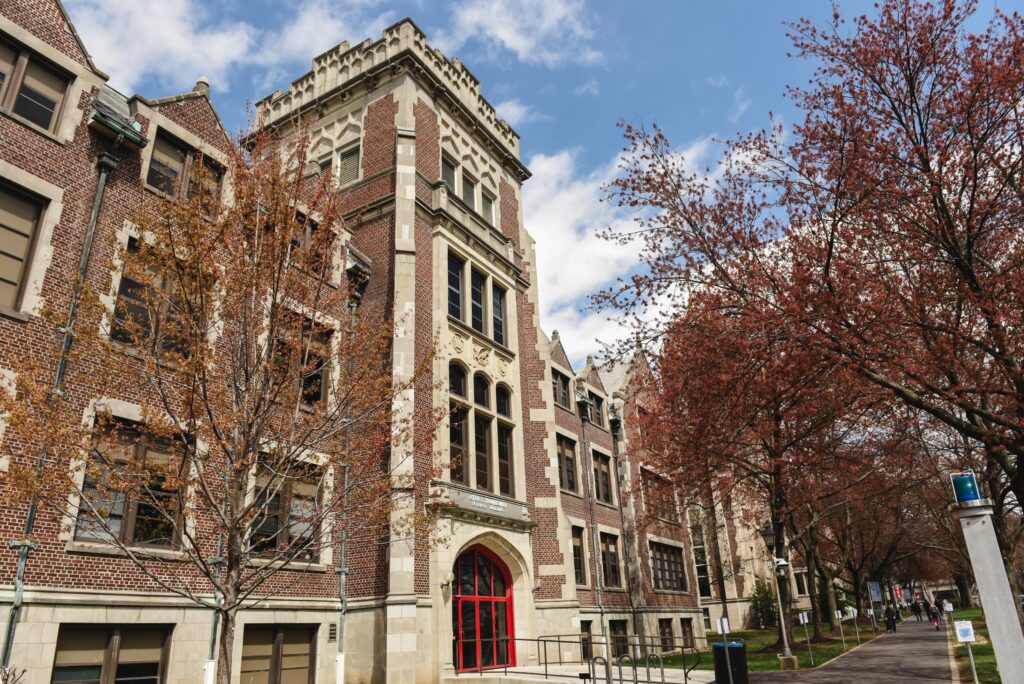
The Peter S. Trumbower Science Building (built in 1926) houses the chemistry, physics, and mathematics, computer science, and statistics departments. It offers labs, lecture halls, classrooms, and research spaces.
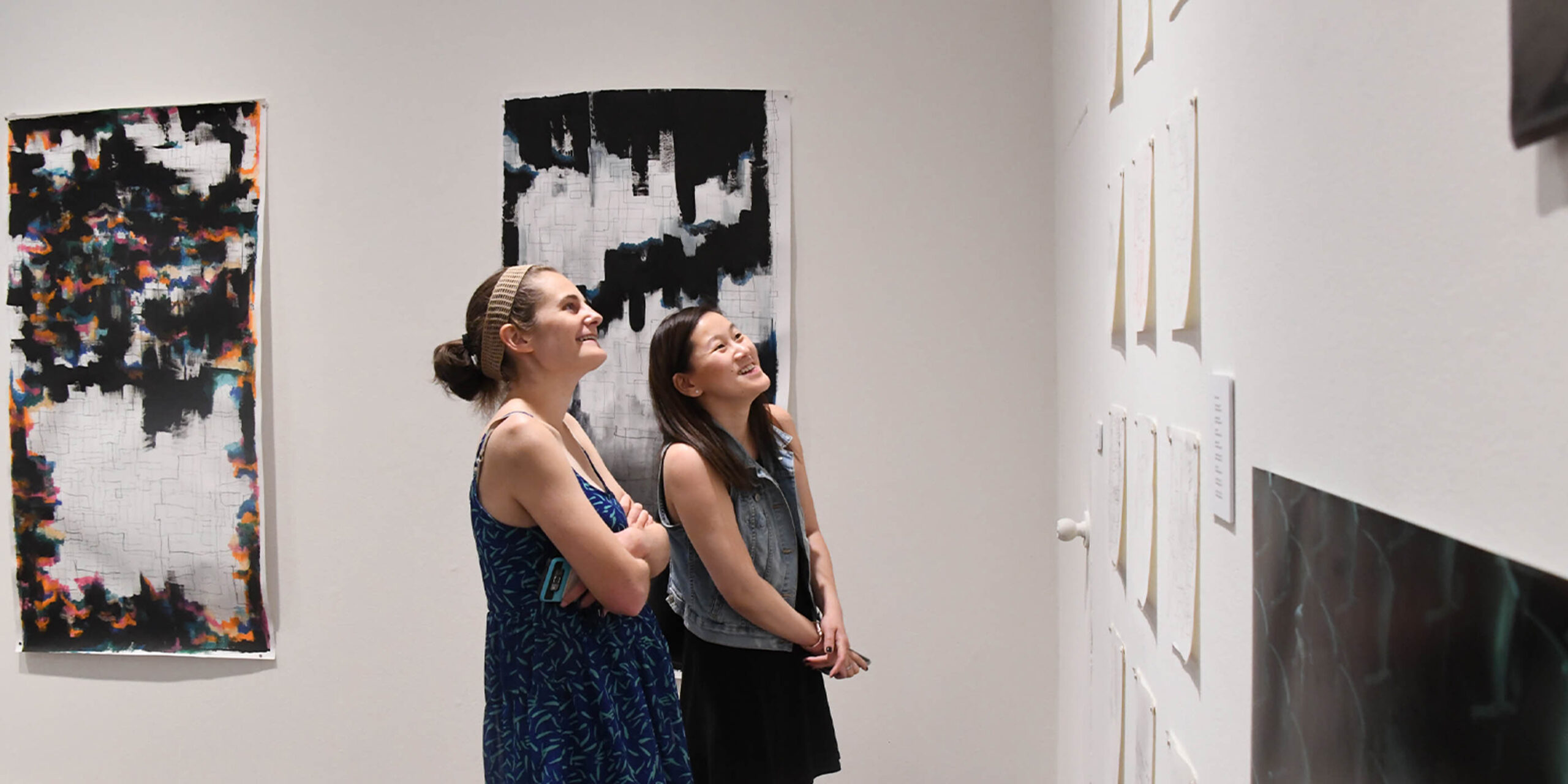
Martin Art Gallery
Located inside the Baker Center for the Arts, Martin Art Gallery hosts exhibitions and other public events.