Anthropology
Understand the breadth of humanity by exploring how we live, build, and believe.
Why anthropology matters:
Anthropology helps us understand the full range of human experience — from ancient societies to globalized cities, from ritual to resistance. As cultures shift and intersect, the ability to listen, observe, and interpret across differences has never been more valuable.
How anthropology is taught at Muhlenberg:
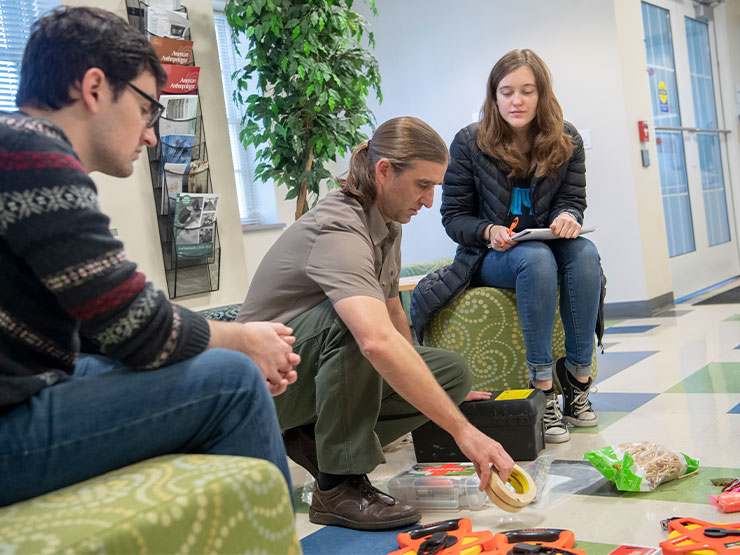
Anthropology students study culture, archaeology, evolution, and language through hands-on, immersive experiences. Fieldwork, lab work, and community-engaged research are central to the curriculum, with opportunities to dig into real artifacts, conduct ethnographic studies, or travel abroad through faculty-led programs. It’s a deeply human, deeply practical education.
- 93%of graduates begin a career or advanced studyBy six months after graduation
- 9:1student-to-facultyClassroom ratio
- Top 10%for ROIAmong all U.S. colleges and universities
- 91%retention rateMost Muhlenberg students return for their second year
Request Info
Anthropology majors at Muhlenberg gain a comprehensive understanding of human diversity, evolution, and society through a mix of cultural, biological, and archaeological study. You'll explore how people across the globe live, think, govern, create, and connect — both in the present and throughout history.
Courses span topics like language and kinship, health and healing, politics and religion, and material culture, asking big questions about how human communities are formed and sustained. Cultural anthropology emphasizes immersive fieldwork, encouraging students to engage deeply with local and global communities. Archaeological coursework adds historical depth by analyzing architecture, artifacts, and human remains to reconstruct the past.
Students interested in deeper research may apply to anthropology’s honors program, which includes advanced independent study under faculty mentorship.
Anthropology at Muhlenberg extends far beyond textbooks. Through immersive, hands-on experiences, you'll explore what it means to be human by engaging directly with the people, places, and materials that shape human life in the past and present.
Students might:
- Travel to nearby field sites to study how local history intersects with ecology
- Collect and analyze ethnographic data
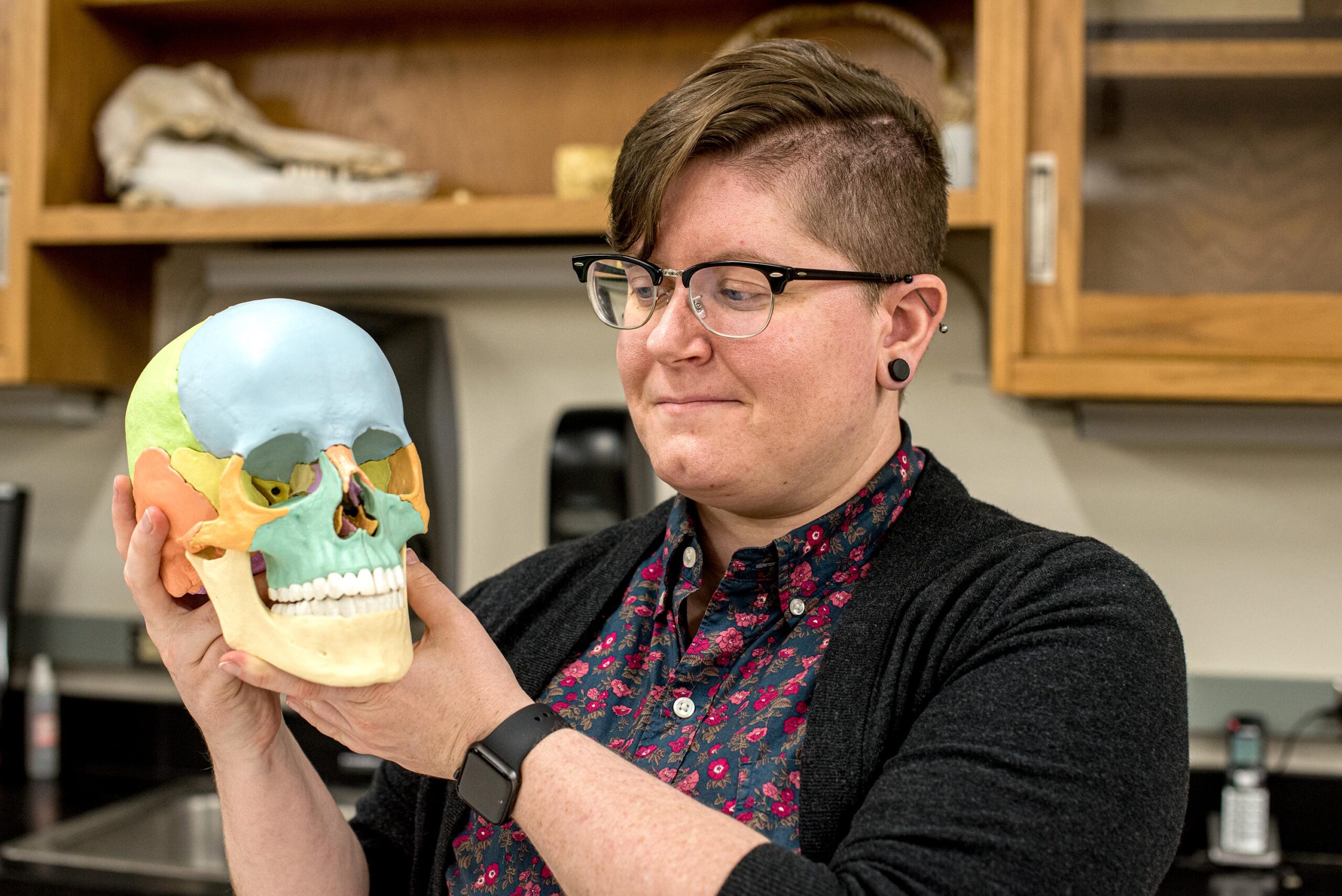
- Examine replica human, ape, and fossil skeletons
- Learn archaeological techniques by working with artifacts or even making stone tools
- Participate in a Muhlenberg Integrative Learning Abroad (MILA) course that brings anthropological concepts to life through short-term global travel
You’ll also have the chance to pursue independent research, collaborate with faculty, or apply for the honors program, which includes advanced, original research supported by close faculty mentorship.
These hands-on learning opportunities not only deepen your academic understanding but also prepare you with adaptable skills for careers in research, public health, education, policy, and more.
Powerful Outcomes
A Muhlenberg education sets you up for success. The liberal arts will hone your ability to think critically, communicate, and problem-solve, skills that are in high demand across all employment sectors.
Sociology and Anthropology News
Ednah Asiema ’26 Conducts Research on Women's Roles in China and Korea
Asiema, a pre-law international studies major and political science and anthropology double minor, is looking at both history and today's society to understand gender inequality.
Read MoreAnthropology Research Examines Black Community Central to Underground Railroad
Associate Professor Ben Carter has worked with students and descendants to document portions of Six Penny Creek, a settlement home to about 50 people at…
Read MoreWhy I Study … Queer China
Assistant Professor of Anthropology Casey James Miller explains how he came to his area of research.
Read More