Physics
Develop the problem-solving skills that power discovery, innovation, and understanding of the natural world.
Why physics matters:
Physics is the study of the fundamental principles that govern the universe, from the smallest particles to the largest cosmic structures. It sharpens deductive and analytical reasoning while challenging students to translate intuitive models of nature into mathematical language. These skills not only deepen understanding of natural phenomena but also prepare graduates to navigate an ever-changing technical world. Physics training is valued across diverse fields, from engineering and medicine to research, education, and technology development.
How physics is taught at Muhlenberg:
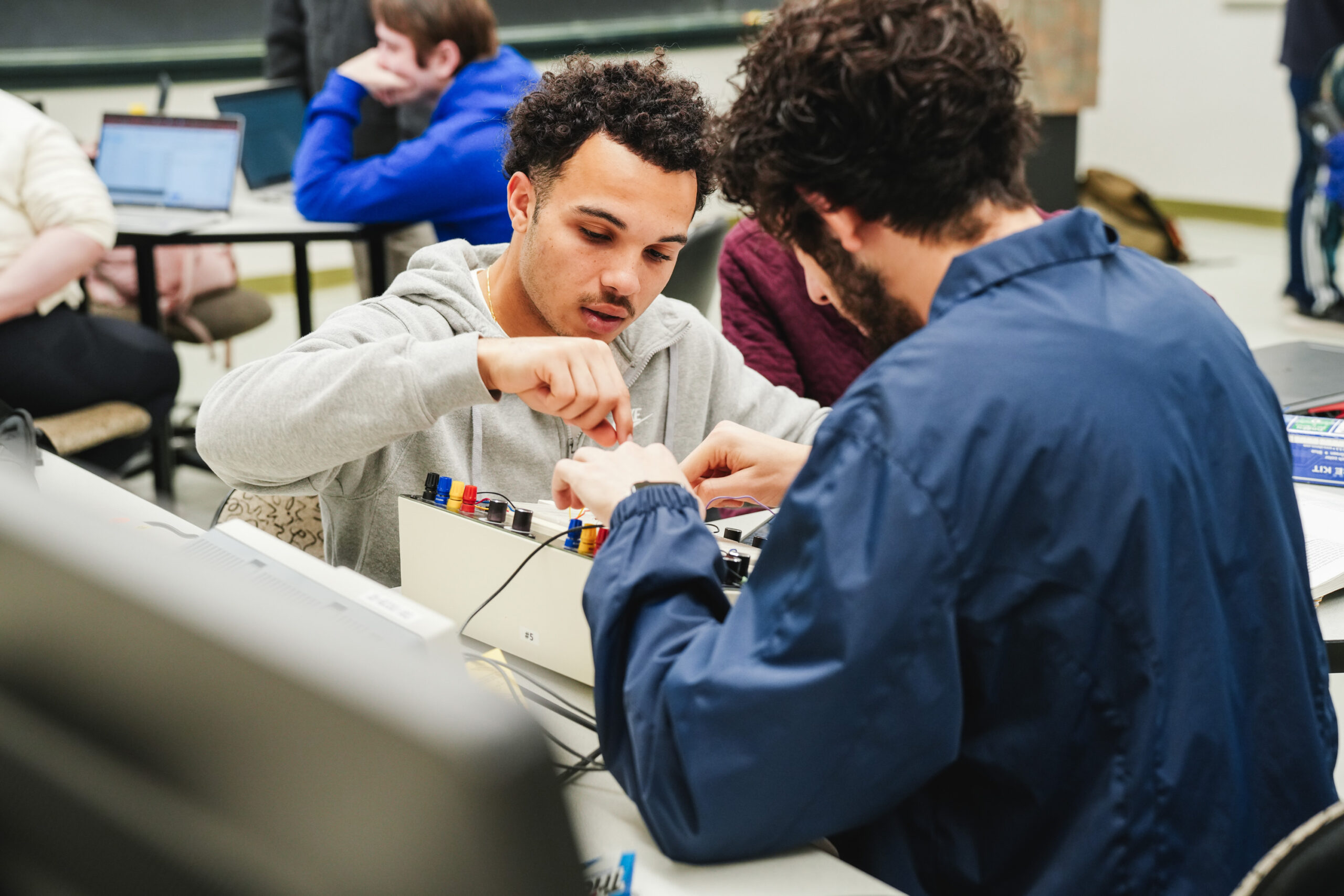
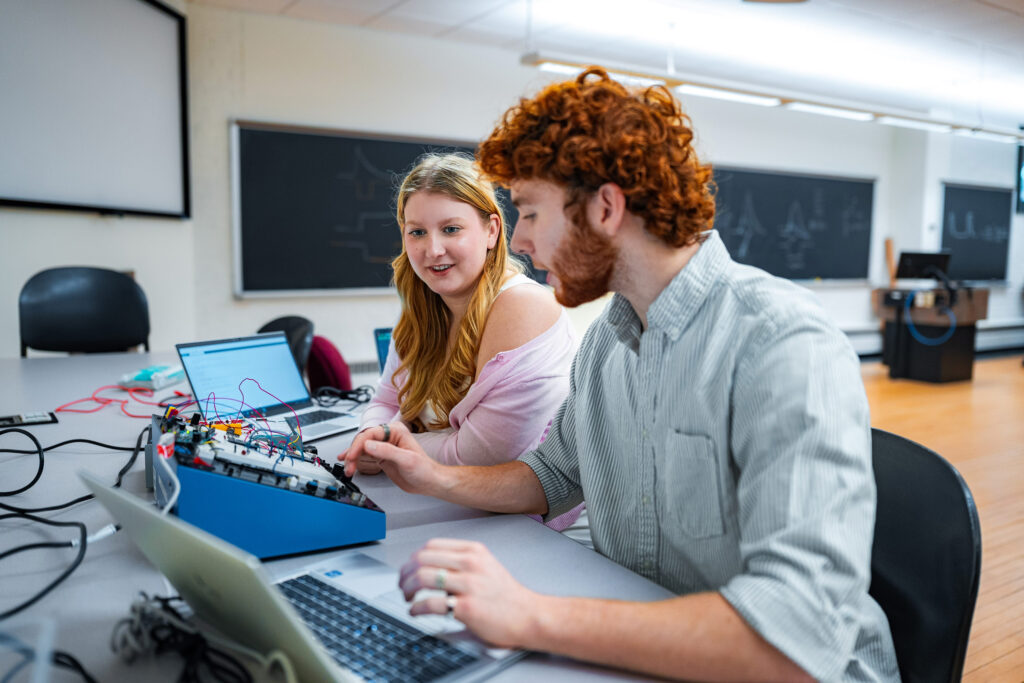
At Muhlenberg, physics students learn in small classes with faculty dedicated to personalized mentorship and hands-on exploration. The curriculum builds a strong foundation in mechanics and relativity, thermal physics, electromagnetic fields, wave motion, and quantum mechanics. A robust liberal arts environment fosters creativity and communication skills, complementing rigorous scientific training. Students can tailor their studies to career goals, whether aiming for graduate school, teaching certification, or a career in engineering through the college’s engineering dual degree program with Columbia University.
- 93%Working or enrolledSix months after graduation
- 8:1Student to FacultyClassroom ratio
- 80%HigherROI of a Muhlenberg degree compared with other college degrees across the nation
- 91%Retention rateMost Muhlenberg students return for their second year (compared with 58% national average)
Request Info
The physics major provides comprehensive training in classical and modern physics, integrating theory with substantial laboratory experience. Courses range from introductory offerings — such as Physics for Life, Astronomy, Cosmology, and The Physics of Music — to advanced topics for students pursuing science-intensive careers. Core sequences in general physics lead to upper-level study in specialized areas like quantum mechanics, electromagnetic theory, and thermodynamics. The program is designed to prepare students for graduate or professional school, secondary-level teaching, or technical roles in industry, research, and engineering.
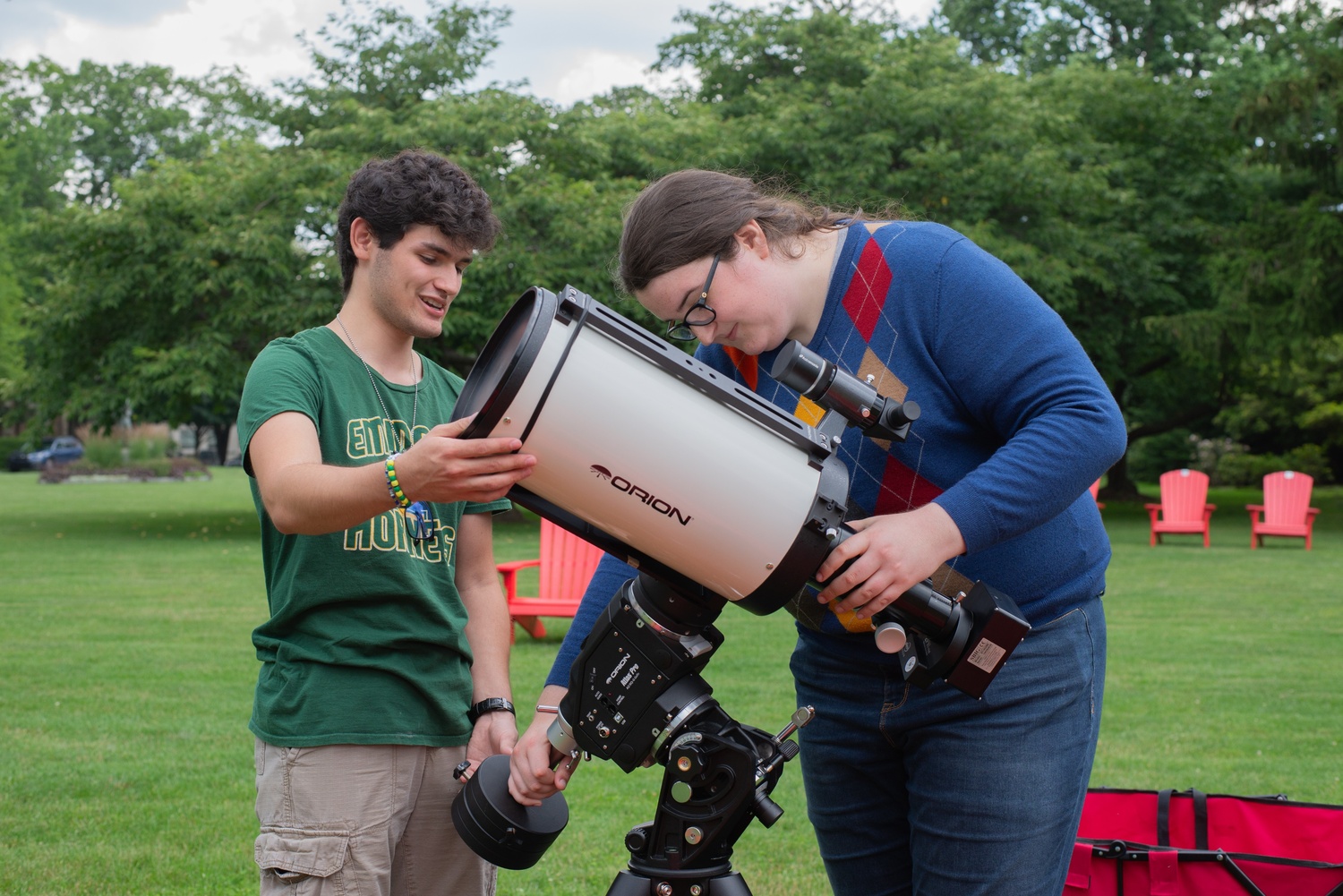
Experiential learning is central to the program. From the first year, students conduct experiments using high-tech equipment such as TeachSpin instruments, 3D printing tools, and custom-built apparatus. Partnerships, like the one with Brookhaven National Laboratory, give students access to unique resources including a Relativistic Heavy Ion Collider. Nearly all advanced students engage in independent research with faculty mentors, exploring topics like high-energy physics, the physics of music, observational astronomy, and remote sensing. Career preparation is further supported through teaching certification pathways and the engineering dual degree program, which combines Muhlenberg’s personalized academic environment with Columbia University’s specialized engineering training.
Powerful Outcomes
A Muhlenberg education sets you up for success. The liberal arts will hone your ability to think critically, communicate, and problem-solve, skills that are in high demand across all employment sectors.
Mules Making a Difference
Muhlenberg’s Competitive Programming Team
The team, whose members jokingly call it “Nerd Club,” took third place in the Consortium for Computing Sciences in Colleges Northeast Region competition, again outperforming…
Read MoreAlumni Weekend 2025 Recap (Video)
Alumni Weekend 2025 Recap (Video) - Mules of all ages returned to campus to reunite with friends, reminisce, and take part in activities.
Read MoreAdrián Padrón-Curet
Padrón-Curet, a theatre and Spanish double major, conducted fieldwork in Puerto Rico and in the United States to learn about Puerto Rican theatre and society…
Read More