Biochemistry
Explore the building blocks of life that underpin breakthroughs in medicine, technology, and more.
Why biochemistry matters:
Biochemistry reveals the molecular building blocks of life, from DNA and proteins to enzymes and energy systems. It plays a central role in breakthroughs across medicine, genetics, public health, and biotechnology. As science and society evolve, biochemistry helps us answer urgent questions — how diseases spread, how drugs work, and how we care for human and planetary health.
How biochemistry is taught at Muhlenberg:
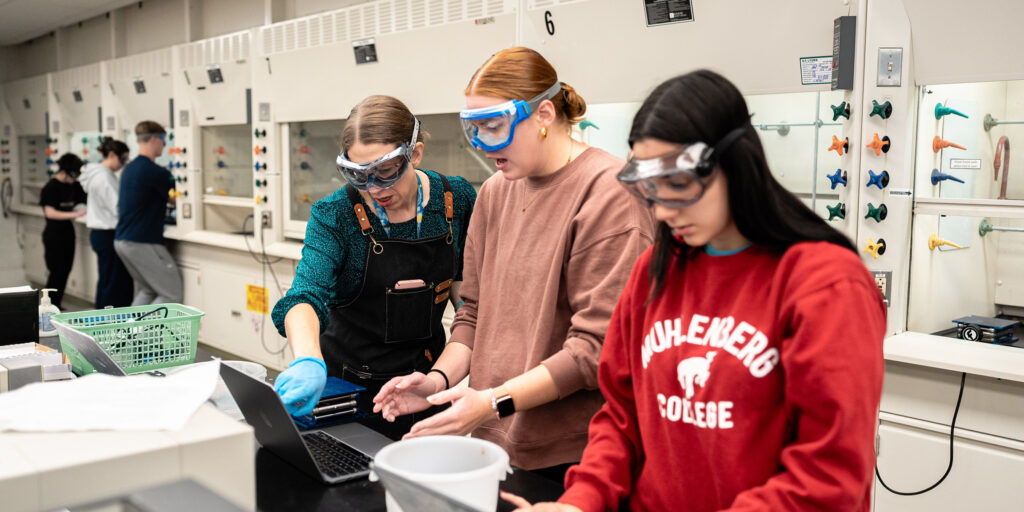
Biochemistry at Muhlenberg blends rigorous coursework with hands-on lab experiences in both chemistry and biology. Students learn to think critically, design experiments, and interpret real data while exploring ethical questions at the heart of scientific progress. Faculty-mentored research, flexibility for double majors, and paths to original honors projects prepare graduates for careers in science and medicine — or wherever their curiosity leads.
- 89%of chemistry and biochemistry majorsparticipate in faculty-mentored research
- 84%of chemistry and biochemistry majorshave a second major and/or a minor
- 100%of chemistry coursesare taught by faculty who hold a Ph.D.
- 93%of all graduates begin a career or advanced studyby six months after graduation
Request Info
Biochemistry at Muhlenberg combines coursework from both the biology and chemistry departments, giving students a strong foundation in the chemistry of life — from cells and molecules to enzymes and genetic material. The curriculum includes foundational courses, hands-on lab experiences, and advanced seminars that guide students from basic principles to independent exploration.
Along the way, students learn to design experiments, interpret data, and think critically about the role of biochemistry in fields like medicine, genetics, pharmacology, and molecular biology. Many students go on to pursue graduate or professional study, while others apply their skills directly in research labs, biotech companies, or healthcare settings.
Students with a strong academic record may pursue an honors thesis, conducting original research under faculty mentorship and presenting their work in both written and public forums.
Biochemistry students gain hands-on experience through lab-based courses, faculty-mentored research, and independent projects. Many present at conferences or co-author publications, while others pursue internships in clinical, academic, or industry settings.
Students seeking deeper research opportunities can apply to the biochemistry honors program, which includes a thesis and public presentation. These experiences build technical skills, confidence, and a strong foundation for careers in science or medicine and/or for graduate school.
Meet a Biochemistry Major

Keri Colabroy
I think research is the best teaching I do. The power of being able to look at a problem and instead of being afraid of trying to solve it, you have a willingness to try this or try that … I can’t provide a student with a better set of tools.READ ABOUT COLABORY'S STUDENT-CENTERED RESEARCH

Powerful Outcomes
A Muhlenberg education sets you up for success. The liberal arts will hone your ability to think critically, communicate, and problem-solve, skills that are in high demand across all employment sectors.
Biochemistry News
Alumnus Leonard Zon ’79 Awarded Prestigious 2026 March of Dimes Prize
From ’Berg to Harvard: Muhlenberg alumnus Leonard Zon ’79 has been awarded the 2026 March of Dimes Prize in Developmental Biology.
Read MoreMuhlenberg Receives $315,000 National Science Foundation Grant to Support Chemistry Chair's Research
Muhlenberg Receives $315,000 National Science Foundation Grant to Support Chemistry Chair's Research This is the second time Professor of Chemistry Keri Colabroy's project, which has…
Read MoreMeet Premed Biochemistry Major Anam Ali ’25
Meet Premed Biochemistry Major Anam Ali ’25, a Spanish minor and part of a research lab and the Muslim Student Association.
Read More