Biology
Understand the mechanisms of life.
Why biology matters:
Biology is the science of life, vital to solving urgent challenges in health, the environment, agriculture, and biotechnology. It helps us understand everything from disease outbreaks to ecosystem collapse, from the intricacies of DNA to the movement of entire populations. Studying biology gives students the tools to think critically about life on Earth and to contribute meaningfully to its future.
How biology is taught at Muhlenberg:
Biology at Muhlenberg combines depth and breadth — from molecular biology and genetics to evolution, ecology, and conservation. Students learn through inquiry-driven coursework, field experiences, and hands-on lab research. With close faculty mentorship and opportunities for independent projects, study abroad, and community engagement, students graduate prepared for careers in science, medicine, environmental work, or wherever curiosity leads.
- 100%of biology students who requested summer research funding received awards
- 16studentsTypical laboratory section size
Request Info
Biology majors at Muhlenberg study life at every level — from molecules and cells to ecosystems and evolution. The curriculum emphasizes not only the content of biology, but the process: how to ask meaningful questions, gather and interpret data, and evaluate scientific evidence.
Students build foundational skills in biological theory and practice, with the flexibility to pursue advanced coursework aligned with their goals. The major prepares students for graduate study in the life sciences, health professions, education, environmental fields, and more. Students with strong academic records may apply to the department’s honors program, which includes original research and a public presentation.
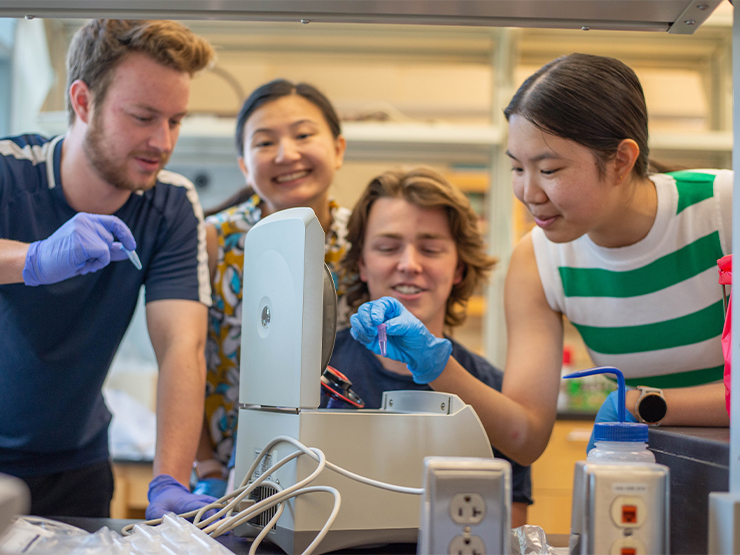
Biology students at Muhlenberg learn by doing, and one of the most powerful ways that happens is through undergraduate research. Biology students can expect to work closely with faculty, all of whom have student-involved projects running year-round.
Those projects explore:
- how vaping affects the oral microbiome (Giancarlo Cuadra)
- the prevalence of ticks that are infected with the bacteria that cause Lyme disease and other pathogens in the Lehigh Valley (Marten Edwards)
- the behavioral ecology of freshwater arthropods and snails (Erika Iyengar)
- the threat that sheet glass and plastic windows pose for birds in human structures (Dan Klem)
- the development of marine invertebrates (Elizabeth McCain)
- plant ecology (Rich Niesenbaum)
- the molecular genetics of development in the nematode Caenorhabditis elegans (Bruce Wightman)
A Look Inside the Lab: Giancarlo Cuadra
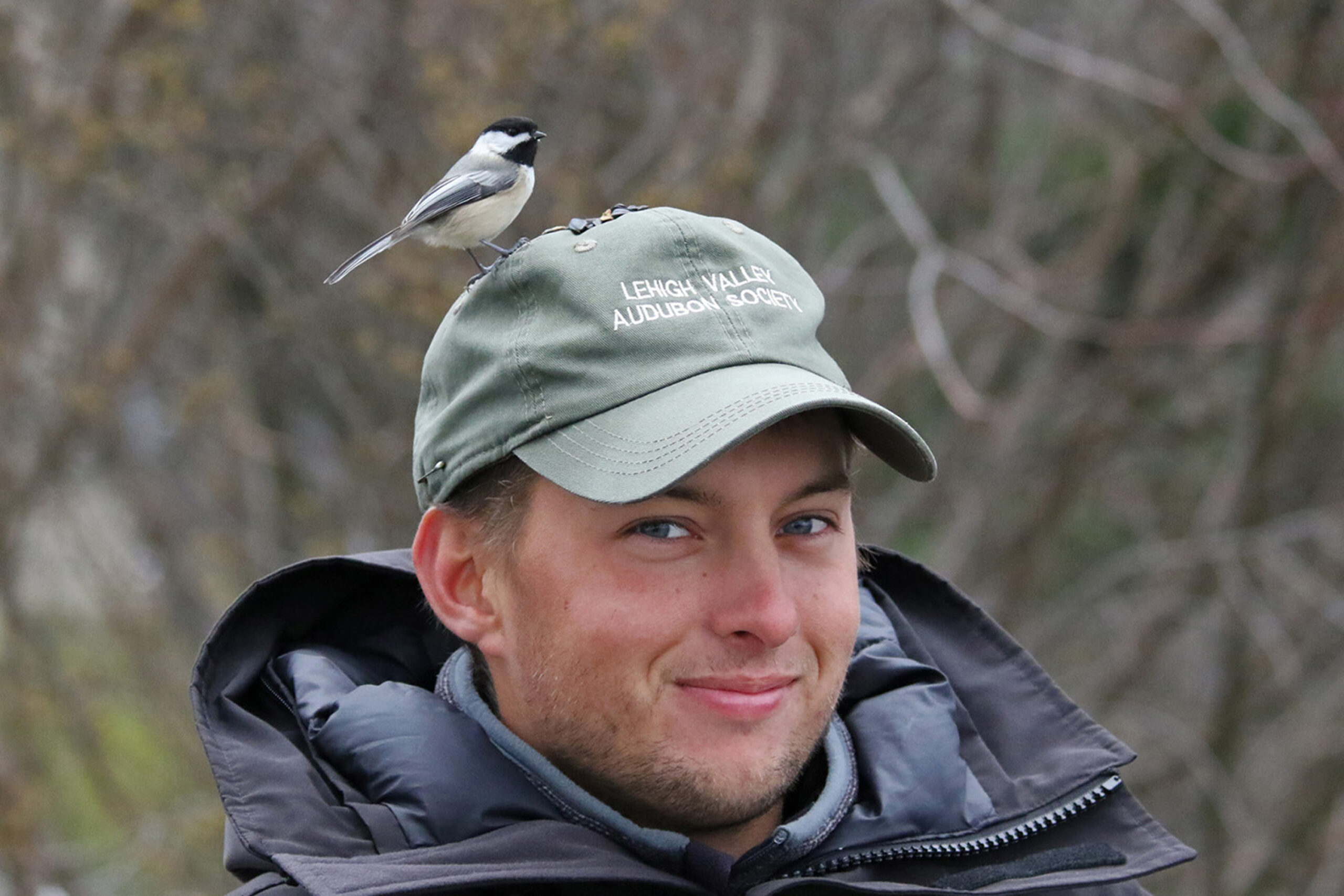
Brandon Brogle ’20, took part in groundbreaking research with the college’s world-renowned Acopian Center for Ornithology and continues to assist in research efforts while working for EnviroScience as an avian field technician.
Powerful Outcomes
A Muhlenberg education sets you up for success. The liberal arts will hone your ability to think critically, communicate, and problem-solve, skills that are in high demand across all employment sectors.
Biology News
Student-Athlete Erin DiSandro ’26 Receives NCAA Postgraduate Scholarship
The field hockey player, a pre-health biology major and public health minor, will be attending medical school at the Lewis Katz School of Medicine at…
Read MoreLook Inside the Lab Researching Vaping's Effects on the Oral Microbiome
Muhlenberg professor and student team are exploring how exposure to e-liquids changes the function of immune cells.
Read MoreStudents Present Research in Spain
Summer Check-In: Three Students Present Research at Conference in Barcelona, Spain Sabeen Safi '26, a pre-dental public health major, shares her experience of presenting the…
Read More