History
Study the past to shape the future.
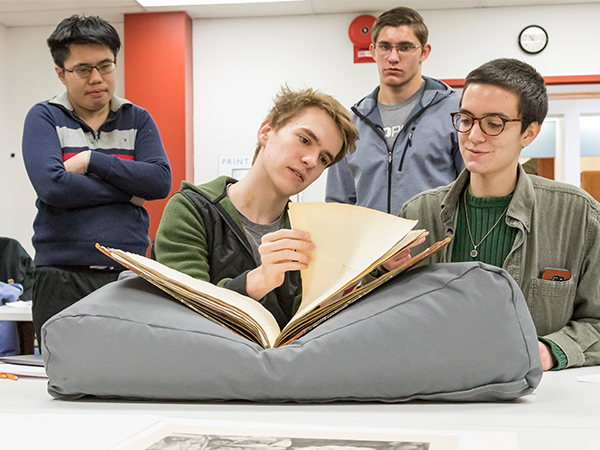
Why history matters:
Researching the past empowers us to navigate complex questions and imagine a better future. The history program at Muhlenberg will equip you to think like a global citizen, explore the human condition, and strengthen your skills in critical thinking, effective communication, problem-solving, and independent research. These are essential, versatile skills that prepare you for careers in law, government, public health, medicine, nonprofits, library sciences, education, business, and other professions where research and writing are highly valued.
How history is taught at Muhlenberg:
As a history student at Muhlenberg, you’ll develop nuanced understandings of human experiences across time and place while engaging in active debate and dynamic classroom discussions that examine historical narratives from multiple perspectives. You’ll work closely with faculty experts whose specialties span Africa, Asia, Europe, Latin America, the Caribbean, the Middle East, and the United States, studying a wide range of sources, themes, time periods, and societies, while tailoring your major to your own interests.
- 93%Working or enrolledSix months after graduation
- 8:1Student to FacultyClassroom ratio
- 80%HigherROI of a Muhlenberg degree compared with other college degrees across the nation
- 91%Retention rateMost Muhlenberg students return for their second year (compared with 58% national average)
Request Info
The history curriculum develops students’ knowledge of the political, social, cultural, economic, and institutional forces that have shaped the world while building the ability to find, synthesize, and interpret historical evidence. Students engage in extensive research, writing, and critical analysis, gaining a strong foundation for careers in a wide variety of fields. Majors complete a capstone research seminar and may pursue departmental honors by producing an in-depth thesis using primary sources and defending it in an oral examination.

Your studies will extend beyond the classroom through research projects, internships, and global learning opportunities. Many students study abroad for a semester or take part in short-term Muhlenberg Integrative Learning Abroad (MILA) programs in locations such as Cuba, Spain, Morocco, South Africa, or Turkey. On campus, you can join the student-run History Club or apply for Phi Alpha Theta, the national honor society for history students. These experiences help you connect your historical knowledge to real-world contexts and develop skills that will serve you well in any career.
Powerful Outcomes
A Muhlenberg education sets you up for success. The liberal arts will hone your ability to think critically, communicate, and problem-solve, skills that are in high demand across all employment sectors.
History News
Greta Marchildon
Summer Check-In: Greta Marchildon '26, public health and history double major and field hockey student-athlete, is an intern at Sweetser, a behavioral health nonprofit.
Read MoreHow The Muhlenberg Weekly Helped Me Find My Voice
The student newspaper has introduced me to new people and experiences that have changed the way I look at writing, journalism, and myself.
Read MoreA History of the LGBTQ+ Community at Muhlenberg
Last semester, Roman Craig ’27 and Alexa Cinelli ’27 researched LGBTQ+ history at the College and created a website to showcase their findings.
Read More