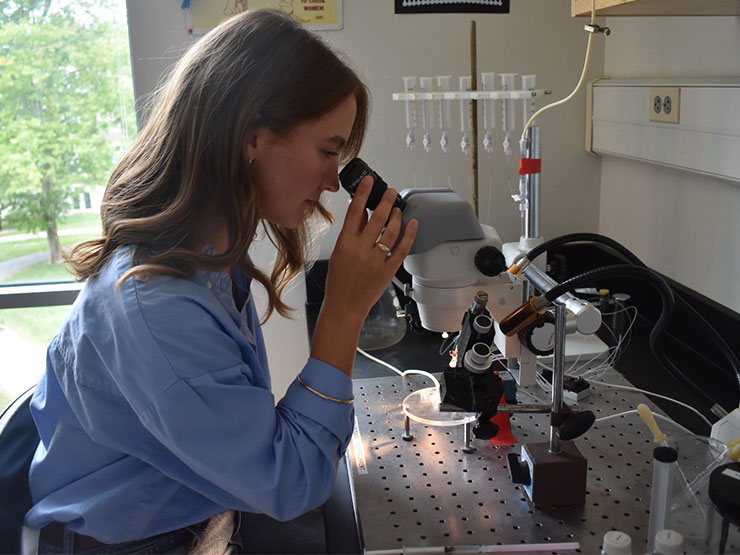
student looks through high powered microscope

Why neuroscience matters:

Neuroscience seeks to answer profound questions about how the brain gives rise to thought, emotion, perception, and behavior. By examining the nervous system from the level of molecules to conscious experience, the field illuminates the biological foundations of human and animal life, as well as the ways we experience the world in both neurotypical and neurodivergent forms. It is a discipline that bridges the sciences and the humanities, drawing from biology, chemistry, psychology, mathematics, philosophy, and computer science to tackle some of society’s most complex challenges — from understanding memory and mental health to advancing treatments for neurological disorders. The study of neuroscience cultivates critical thinking, technical skill, and intellectual curiosity that can be applied in research, medicine, technology, education, and beyond.

How neuroscience is taught at Muhlenberg:

At Muhlenberg, neuroscience is immersive, hands-on, and deeply interdisciplinary. You’ll build a foundation in the core principles of neuroscience while connecting your learning to adjacent fields, often through a second major or minor in the arts, humanities, or social sciences. Faculty bring expertise in areas ranging from sensory perception and neurotransmitter function to the neural basis of social behavior, memory, and consciousness. In small classes and active laboratories, you’ll use professional tools — such as EEG, fNIRS, computational modeling, and behavioral analysis — to investigate your own research questions. The program’s flexible, inquiry-driven structure encourages you to follow the topics that spark your curiosity, engage with diverse perspectives, and graduate with both the scientific knowledge and the creative problem-solving skills to lead in a rapidly evolving field.

93%
Working or enrolled
Six months after graduation
8:1
Student to Faculty
Classroom ratio
80%
Higher
ROI of a Muhlenberg degree compared with other college degrees across the nation
91%
Retention rate
Most Muhlenberg students return for their second year (compared with 58% national average)
  • 93%
    Working or enrolled
    Six months after graduation
  • 8:1
    Student to Faculty
    Classroom ratio
  • 80%
    Higher
    ROI of a Muhlenberg degree compared with other college degrees across the nation
  • 91%
    Retention rate
    Most Muhlenberg students return for their second year (compared with 58% national average)
Table of Contents
Loading...

Request Info

Loading...
Program Contact Details
Neuroscience at Muhlenberg
484-664-3200

Loading...

Program Contact Details
Neuroscience at Muhlenberg
484-664-3200

Curriculum

The major combines core neuroscience courses with foundational study in related disciplines, ensuring a well-rounded, interdisciplinary approach. You’ll gain training in molecular, cellular, systems, and behavioral neuroscience while developing quantitative, analytical, and research skills. Electives allow you to tailor your studies to emerging interests, with topics linking neuroscience to identity, culture, ethics, and policy. Lab-based coursework emphasizes mastery of research methods and instrumentation, preparing you for independent projects and advanced study.
From your first year, you can collaborate with faculty in active research labs — whether through course-based projects, credit-bearing research, summer fellowships, or paid assistantships. Students present findings at campus symposia and national conferences, and many co-author peer-reviewed publications. Research topics are diverse, spanning areas such as drug action, animal behavior, memory, sensory processing, and neuroethics. Beyond campus, internships, community engagement, and interdisciplinary collaborations broaden your perspective and connect classroom learning to real-world applications in neuroscience and related fields.

Loading...

Loading...

Jeremy Alden Teissere
Stanley Road Professor, Neuroscience
Leah Wilson
Associate Professor, Neuroscience, Director, Shankweiler Scholars
Matthieu M de Wit
Associate Professor, Department Chair, Neuroscience
Neuroscience

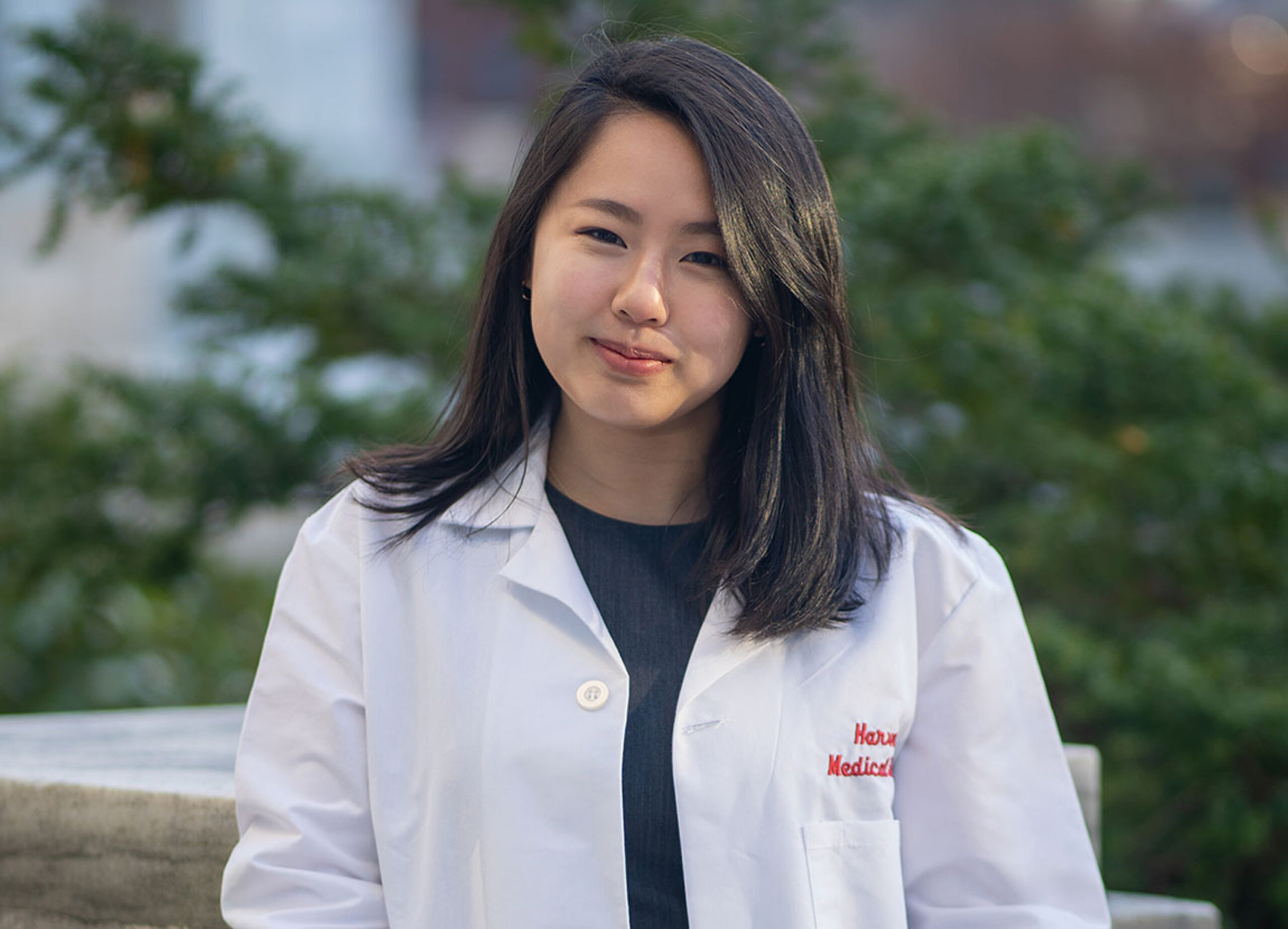
Vivian Ha '20, a neuroscience and predental student, attended the Harvard School of Dental Medicine after graduation.

Powerful Outcomes

A Muhlenberg education sets you up for success. The liberal arts will hone your ability to think critically, communicate, and problem-solve, skills that are in high demand across all employment sectors. 

DISCOVER WHAT'S NEXT

Neuroscience News

Neuroscience Alum Is First Author on Publication in Nature

Julia Rocereta '19, a pharmacology Ph.D. candidate at the University of Pennsylvania, used cryo-electron microscopy to discover how a proposed cardiovascular drug binds to a…

Read More

Senior Neuroscience Major Conducts GABA Receptor Research

Teigan Brown collects frog eggs and utilizes them in the lab, exploring the anti-anxiety properties of skullcap, a medicinal herb.

Read More

Journey Toward a Career in Medicine

This summer, I participated in a four-week clinical observership program made possible by Dr. Lance Bruck ’89 P’21.

Read More