Political Science
Gain the insight and skills to understand power and shape the world.
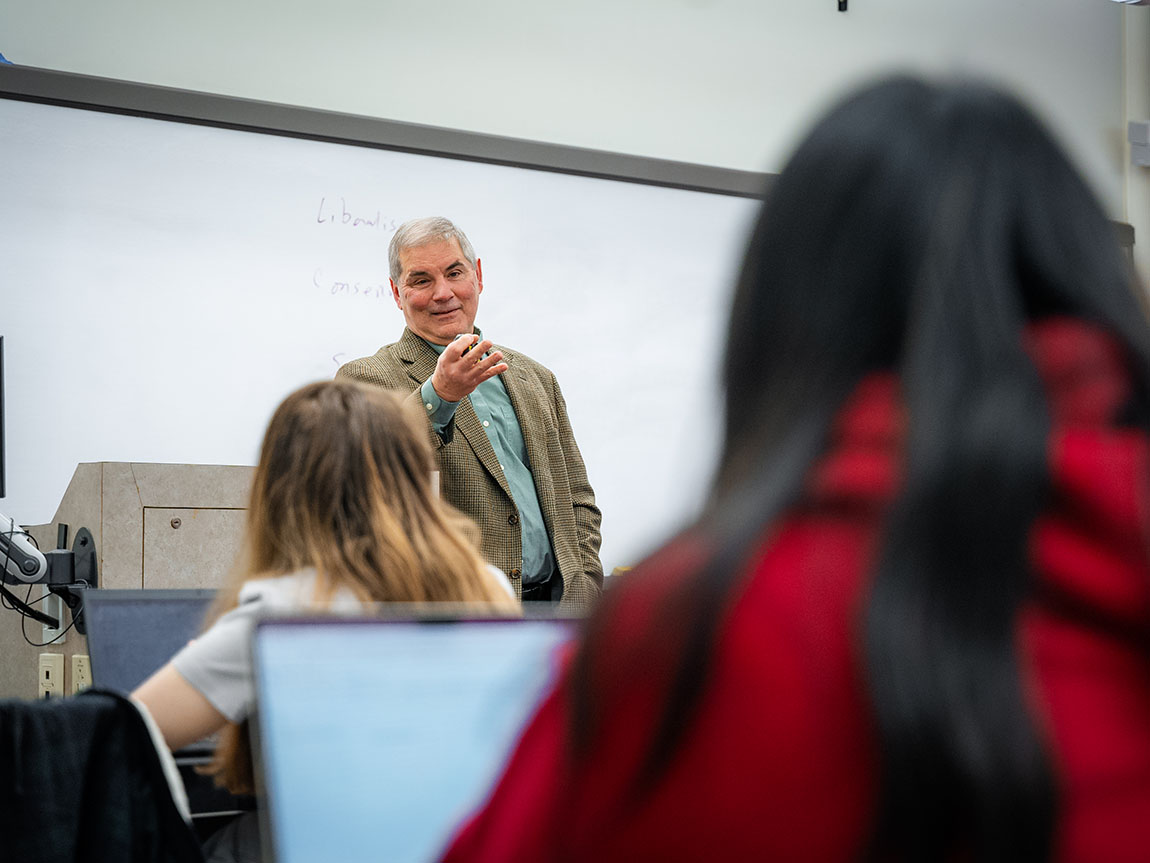
Why political science matters:
Political science examines how power is created, distributed, and exercised, and how governments, institutions, and individuals influence one another in shaping the societies we live in. It addresses critical issues such as democracy and authoritarianism, justice and inequality, peace and conflict, and the rights and responsibilities of citizenship. In a world that is increasingly interconnected and interdependent, political science offers the tools to understand the forces that shape laws, policies, and everyday life — and to engage with the complex challenges facing communities locally, nationally, and globally.
How political science is taught at Muhlenberg:
At Muhlenberg, political science is studied through multiple lenses, including political theory, American political institutions, comparative politics, and international relations. Faculty bring diverse expertise and a commitment to mentorship, helping students build both deep academic knowledge and practical leadership skills. You’ll explore the dynamics of power through classroom learning, independent research, and civic engagement, with opportunities to apply your knowledge in Washington, D.C., across dozens of study abroad locations, or through internships with campaigns, courts, nonprofits, and advocacy organizations.
- 93%of graduates are working or enrolled in advanced studyBy six months after graduation
- 9:1student-to-facultyClassroom ratio
- Top 10%Nationwide ranking for ROI
- 91%retention rateMost Muhlenberg students return for their second year
Request Info
Program Contact Details
The political science curriculum blends core foundations with opportunities for exploration across thematic areas. Students investigate the structures and processes of governance, the challenges facing democracy, the forces shaping international relations, and the ways power interacts with inequality and justice. Courses draw on a variety of methods and approaches, from theory and historical analysis to data-driven research, equipping students with both critical perspectives and practical skills.
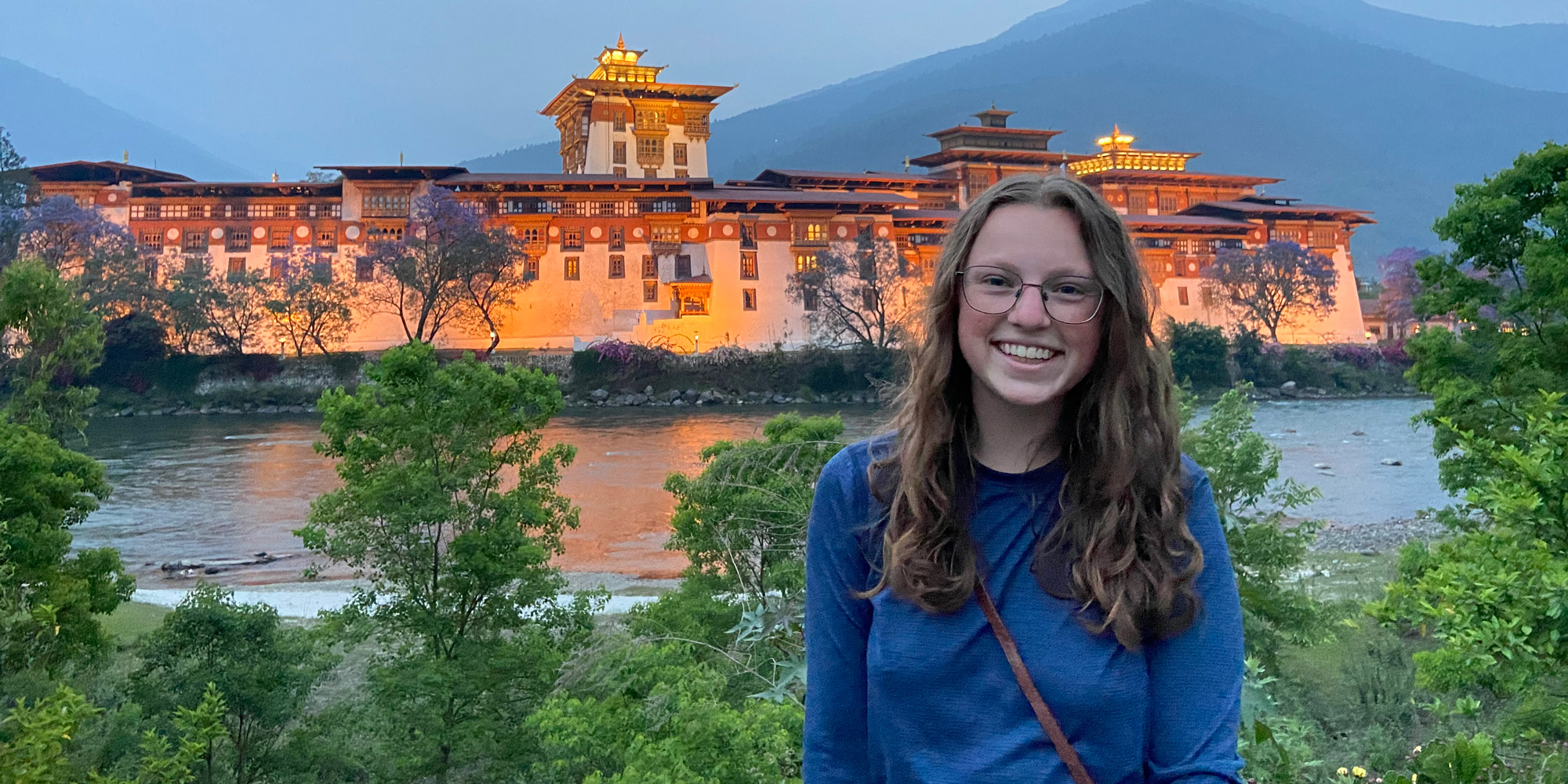
Hands-on learning is central to political science at Muhlenberg. Students engage in internships, study abroad, and programs like the Lutheran College Washington Semester, where they can live, study, and work in the nation’s capital. Many also participate in civic-minded clubs, community projects, and faculty-mentored research, gaining real-world experience while deepening their academic understanding. Students can work for the nationally recognized Muhlenberg College Institute of Public Opinion to help analyze the data it collects on political races and environmental and public health issues.
Sam White '23, a political science and sustainability studies double major, received a Fulbright Award to teach English in Mongolia.
Powerful Outcomes
A Muhlenberg education sets you up for success. The liberal arts will hone your ability to think critically, communicate, and problem-solve, skills that are in high demand across all employment sectors.
Political Science News
Ednah Asiema ’26 Conducts Research on Women's Roles in China and Korea
Asiema, a pre-law international studies major and political science and anthropology double minor, is looking at both history and today's society to understand gender inequality.
Read MoreAmy Swartz '26 Examines Readers' Assumptions About the Race of Fictional Characters
Swartz, an English and creative writing and political science double major, is conducting research that bridges both disciplines.
Read MoreMuhlenberg Receives $1M Gift to Establish Endowed Professorship in Political Philosophy
The Tammy L. Bormann ’83 P’16 and Mark J. Paris ’80 P’16 Endowed Professor in Political Philosophy will be Giacomo Gambino, professor of political science.
Read More