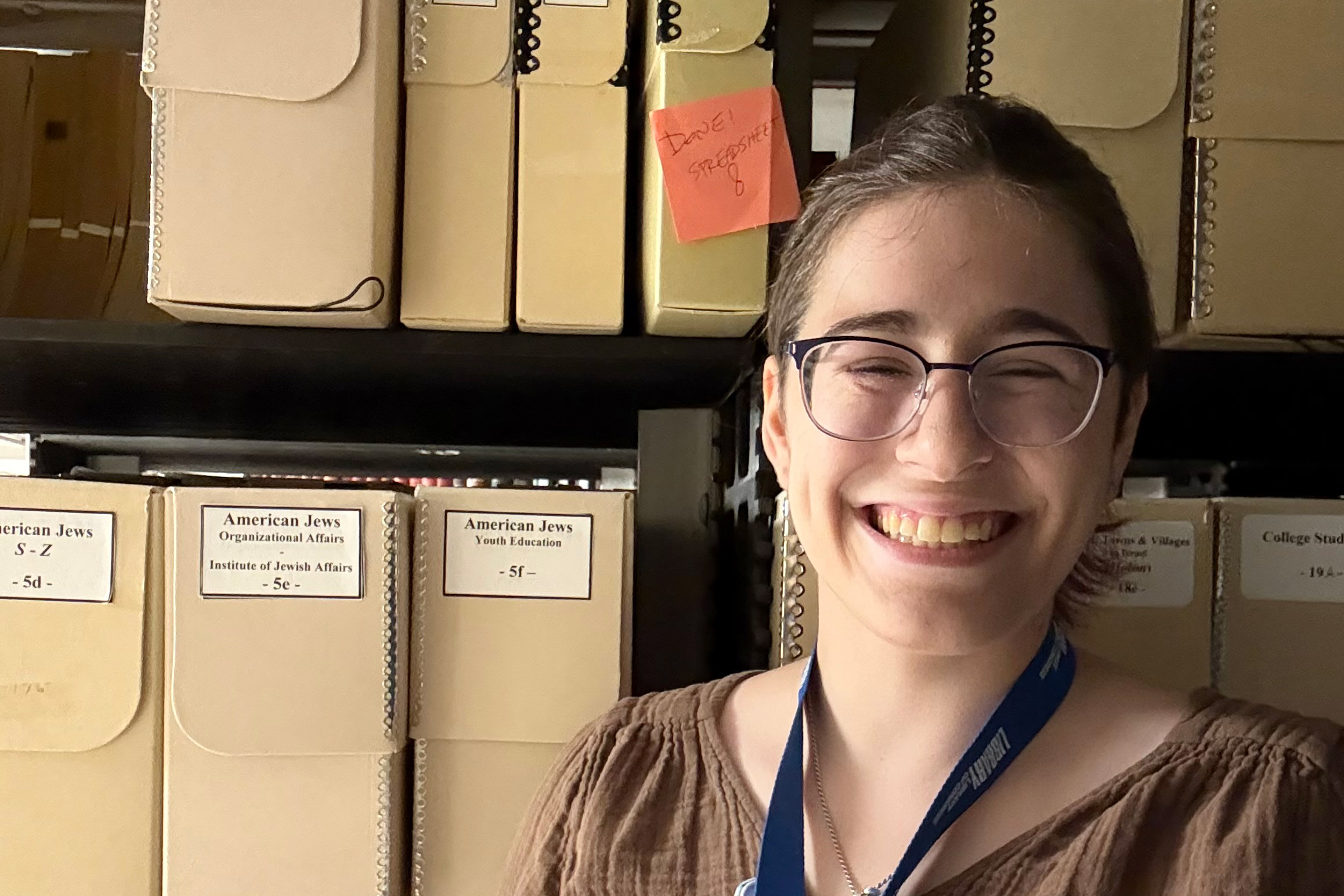
This summer, Hana Feig ’27, a Jewish studies and music double major from Potomac, Maryland, is a junior fellow at the Library of Congress, working on cataloging the Hebraic pamphlets collection.
Why did you decide to pursue this experience?
When the Junior Fellows Program opportunity came up on my LinkedIn (while I was studying abroad in Milan, Italy, this spring), I took a look at the available projects, and saw that one of them (the Hebraic pamphlets collection project) needed someone with my specific skill set (Jewish history interest and proficiency in Hebrew). It seemed like such an interesting and unique opportunity, and paid internships are hard to come by!
I believe that my experience as an intern at the Museum of the Bible last summer made my resume stand out, and I wouldn’t have been able to pursue that opportunity without the support of the Career Center and the Department of Religion Studies.
What does a typical day look like for you?
A typical day starts with commuting to the library via the D.C. Metro, going through the tunnel system that connects the Library of Congress to both the Senate and the House of Representatives in order to get to the AMED (African and Middle East Division) office, and checking my schedule for the day. I usually check in with my project supervisor, then get started with my Excel spreadsheets. Twice a week, I attend the intern program’s professional development series sessions, where professionals from all over the library talk to us about their jobs and experiences, as well as hosting workshops on topics like resume building, LinkedIn, and workplace relations. I often have lunch with some of the other junior fellows.
How have your Muhlenberg experiences helped you in this work?
I believe that my experience as an intern at the Museum of the Bible last summer made my resume stand out, and I wouldn’t have been able to pursue that opportunity without the support of the Career Center and the Department of Religion Studies. The Career Center helped me refine my resume, and religion studies was able to provide funding for an otherwise unpaid internship.