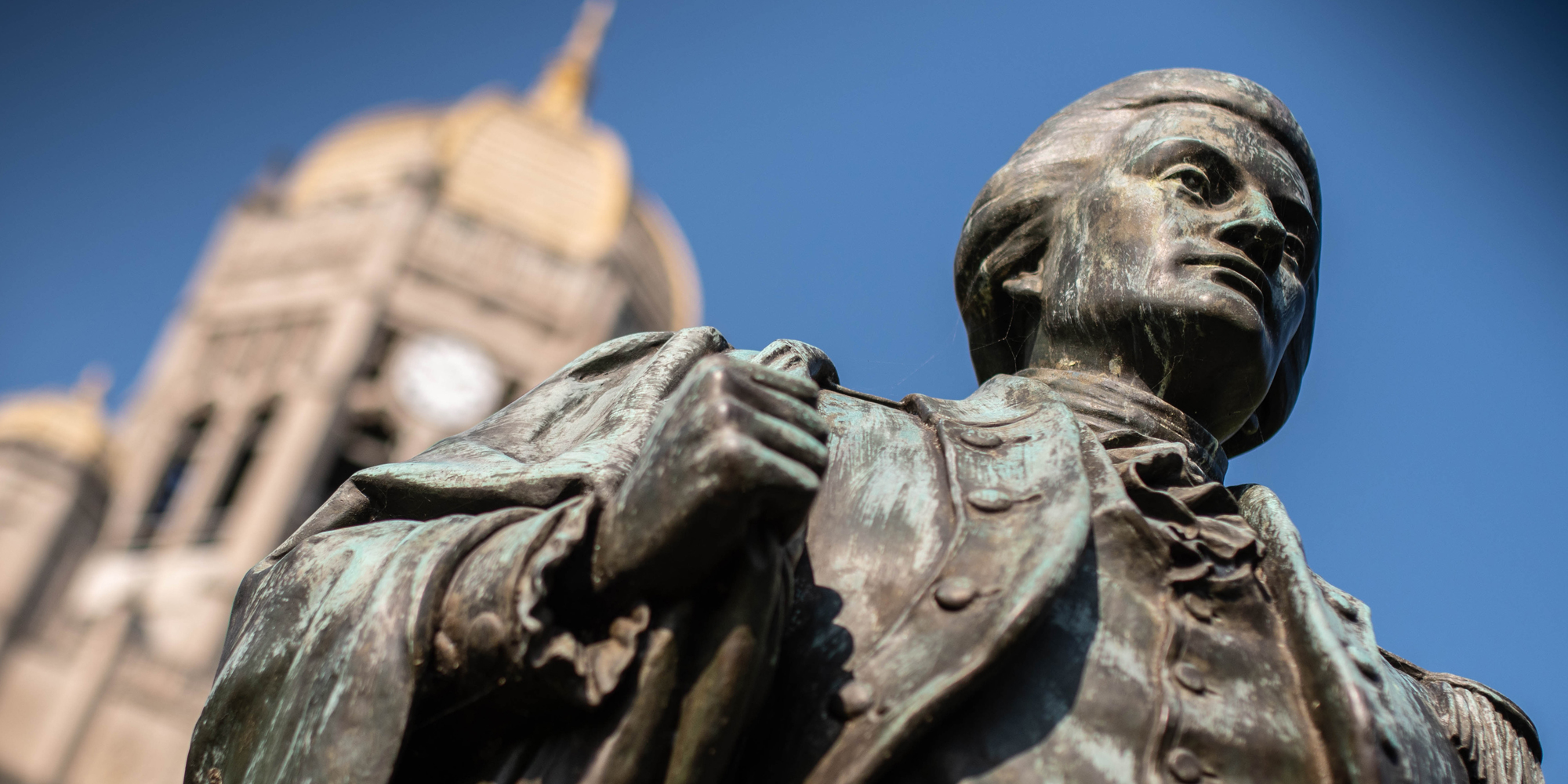
A close-up of the General Muhlenberg statute, with Haas clocktower in the distance.

Muhlenberg College Election Series

Explore elections, American democracy, and civic life through expert lectures, discussions, and events at Muhlenberg College.

Since 1992, the Muhlenberg College Election Series has brought students, scholars, practitioners, and members of the broader community together to examine important questions surrounding U.S. elections and democracy.

Held in conjunction with major election cycles and the college’s political science program, the nonpartisan series features experts from a wide range of fields and perspectives, including political scientists, constitutional scholars, election officials, judges, journalists, advocates, and public servants. Through lectures, panel discussions, and other programs, participants explore the forces shaping elections, political institutions, and civic life in the United States.

About the Election Series

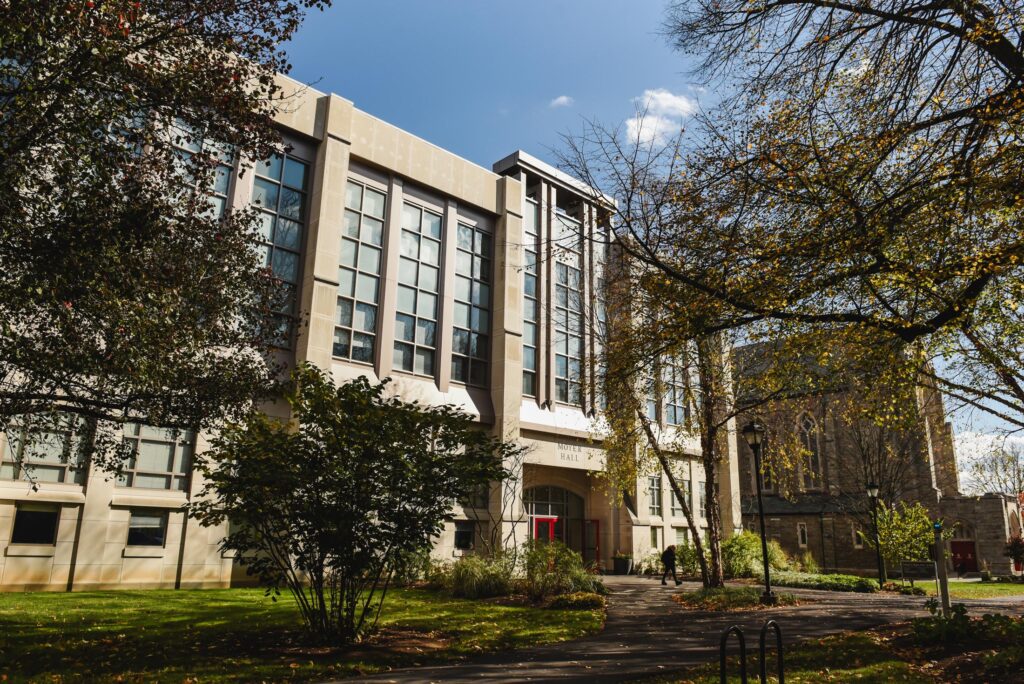
Exterior view of Moyer Hall through the trees

The Election Series is designed to encourage informed, critical engagement with issues that matter during an election and often well beyond it.

Speakers and programs draw on research, professional experience, data, and evidence to help audiences better understand topics such as:

  • American democracy and democratic institutions
  • Elections and voting
  • Political polarization and political violence
  • Constitutional law and government
  • Campaigns and political behavior
  • Civic participation and public life
  • Election administration and election outcomes

The series is nonpartisan. Its purpose is not to advocate for particular candidates or political parties, but to create opportunities for students and community members to examine complex issues, ask questions, and engage thoughtfully with the democratic process.

2026 Midterm Election Series

Muhlenberg’s 2026 Midterm Election Series examines American democracy, constitutional government, and the implications of the 2026 midterm elections through public lectures and campus programs.


Steadying the State: FBI and CIA Veterans on What’s at Stake for American Democracy

With experts Steven Cash and Lauren Anderson ’79, moderated by Mohsin Hashim, Ph.D., chair and professor of political science.
October 6, 5:30 p.m., Miller Forum, Moyer Hall

Steven Cash served in the CIA from 1994-2001 and is now executive director of The Steady State. He served as a former senior advisor to the undersecretary for intelligence at DHS, chief counsel and staff director to a subcommittee of the Senate Judiciary Committee, and chief counsel to Senator Dianne Feinstein.

Lauren Anderson ’79 is a former senior FBI executive, leadership and governance advisor, with more than four decades of experience in national security, intelligence, and geopolitics. She is co-host of The Steady State Sentinel podcast and writes the Substack What We Choose to Defend, where she examines leadership, democratic institutions, national security, and public trust.

The Constitutional Bind: How Americans Came to Idolize a Document That Fails Them

October 19, 6 p.m., Miller Forum, Moyer Hall
Aziz Rana, Ph.D., is the J. Donald Monan, S.J., University Professor of Law and Government at Boston College. His research and teaching center on American constitutional law and political development, with a focus on how shifting notions of race, citizenship, and empire have shaped legal and political identity since the founding of our country. Event funded by alumnus Sidney Milkis, Ph.D. ’72.

Bus Trip: Philadelphia Museum of the American Revolution

October 30, full day
Members of the campus community will explore American democracy in historical perspective during this daylong event. Sign-up is required. Contact Lanethea Mathews-Schultz, Ph.D., professor of political science, at [email protected].

Election Postmortem: A Campus Discussion

November 6, 2 p.m., Seegers Union 108-109
This private, campus community-only session is an opportunity to discuss election results with members of Muhlenberg’s political science department.

This series is funded by the generous support of Sidney Milkis, Ph.D. ’72 and the Alumni Endowment for Political Dialogue and Discourse.
Elections, Politics, and Civic Engagement at Muhlenberg

muhlenberg election series

The Muhlenberg College Election Series is one way the college connects academic study with the political and civic questions shaping contemporary life.

Students have opportunities to learn directly from scholars and practitioners, examine election issues through multiple disciplines, and take part in conversations with members of the college and surrounding community. The series complements Muhlenberg’s broader work in political science, public opinion research, and civic engagement.

Learn More About the Election Series

Is the Muhlenberg Election Series nonpartisan?

Yes. Election Series programs are designed to promote critical thinking and informed discussion rather than advocate for political candidates or parties. Speakers draw on scholarship, professional experience, and analysis to explore relevant political and civic questions.

Who can attend the Muhlenberg College Election Series events?

Many Election Series lectures and discussions are free and open to the public. Some programs, including certain discussions, trips, or education activities, may be limited to Muhlenberg students or members of the college community. Information about event access is provided with each event listing.

What topics does the Election Series cover?

Topics vary by election cycle. Examples of topics covered in current and past series incldue voting and elections, American democracy, constitutional law, political polarization, campaigns, political behavior, civic participation, election administration, and more.

How often does Muhlenberg hold the Election Series?

Muhlenberg has presented the Election Series in connection with major election cycles since 1992. Programming varies from cycle to cycle depending on timely issues, speakers, and opportunities for discussion.

Past Election Series

Explore highlights from previous Muhlenberg Election Series programs examining major U.S. elections and issues shaping American democracy.

Muhlenberg’s 2024 Election Series explored voting, political polarization, public health misinformation, gun violence, and the changing American electorate through public lectures, interdisciplinary panels, and post-election analysis.

Featured programs included:

  • Voting in Pennsylvania: A Forum on Election Processes in the Keystone State — A panel on Pennsylvania voting systems and election administration featuring state and local officials, a retired federal judge, and a political journalist, moderated by Christopher Borick, Ph.D., director of the Muhlenberg College Institute of Public Opinion.
  • The Latino Vote in 2024 and Beyond — Historian Geraldo Cadava of Northwestern University examined the growing influence and complexity of Latino voters nationally and in Pennsylvania.
  • An Infodemic? Misleading Health Information on the Fall 2024 Campaign Trail — Muhlenberg faculty from public health, history, political science, and psychology explored misinformation surrounding health issues during the election.
  • The Rise of Political Polarization and Political Violence — Johns Hopkins University political scientist Lilliana Mason discussed partisan identity, polarization, and political violence in contemporary American politics.
  • Mental Wellness, Mass Shootings, and the Politics of American Firearms — Vanderbilt University scholar Jonathan Metzl examined common assumptions about mental illness, gun violence, and public policy.
  • Election Postmortem — Muhlenberg political science faculty offered an initial analysis of the 2024 election results for members of the campus community.

2022 Midterm Election Series

Muhlenberg’s 2022 Election Series, The 2022 Midterms and the Future of U.S. Democracy, examined election reform, constitutional issues, foreign policy and the implications of the midterm elections for American democracy.

Featured programs included:

  • Electoral Reform in the Commonwealth — David Thornburgh, senior advisor to the Committee of Seventy and chair of Ballot PA, discussed election reform in Pennsylvania.

  • Constitution Day Event — Constitutional law scholar Franita Tolson of the University of Southern California Gould School of Law participated in a virtual Constitution Day program.

  • The Biden Doctrine, the Midterms, and the Future of American Foreign Policy — Swarthmore College political scientist Dominic Tierney explored how the midterm elections intersected with U.S. foreign policy and the Biden administration’s approach to international affairs.

  • Election Postmortem — Muhlenberg faculty discussed the outcomes and implications of the 2022 midterm elections.

  • Center for Ethics Program with Elisabeth Anker — George Washington University scholar Elisabeth Anker participated in a co-sponsored program exploring political and ethical questions related to contemporary American democracy.

muhlenberg election series
MUHLENBERG VOTES

A Tradition of Political Engagement

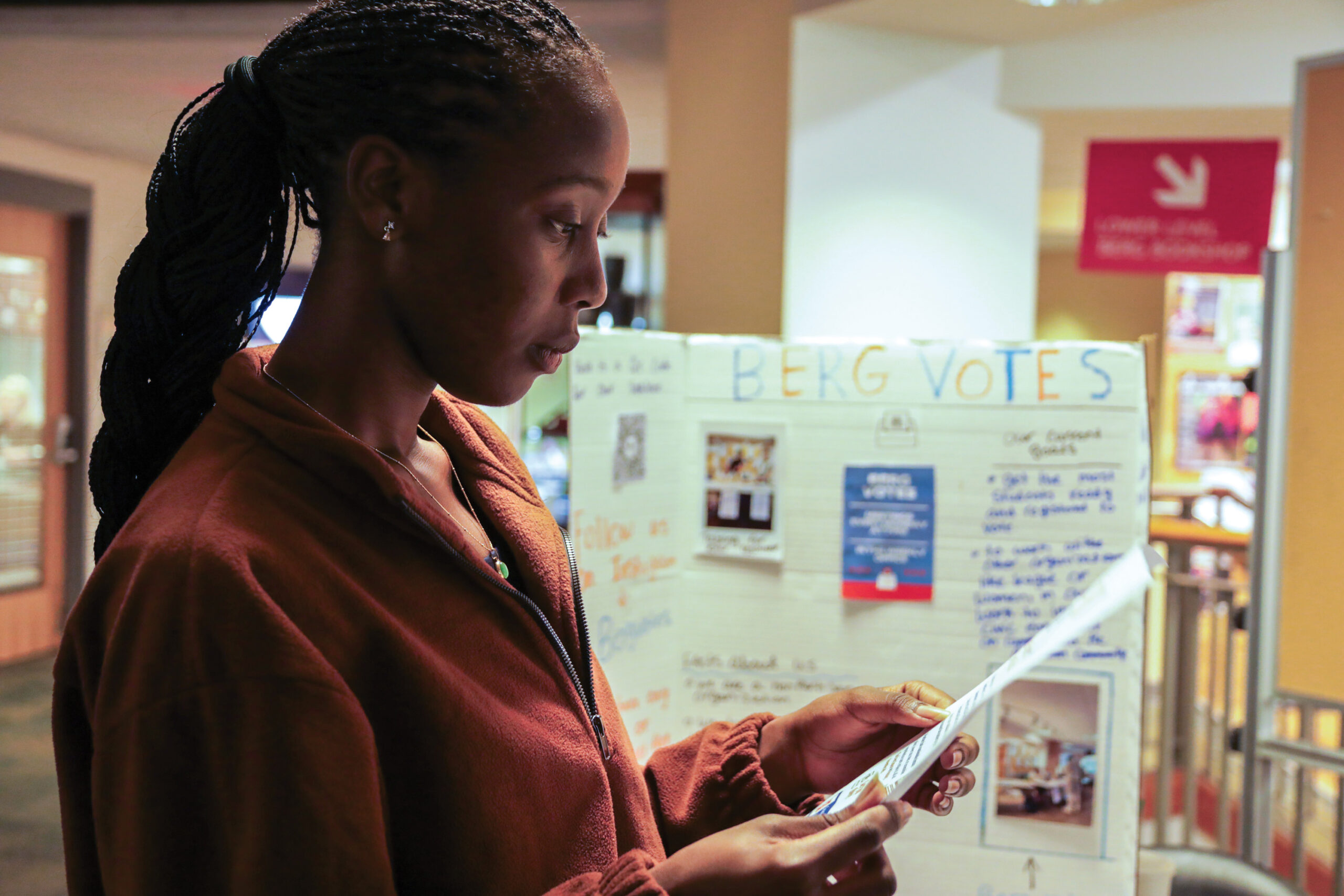
The Muhlenberg community demonstrates high levels of political engagement through robust student voter registration and turnout efforts, the work of a nationally recognized polling institute, and a series of election-related events that have been happening every presidential and midterm election year since 1992.