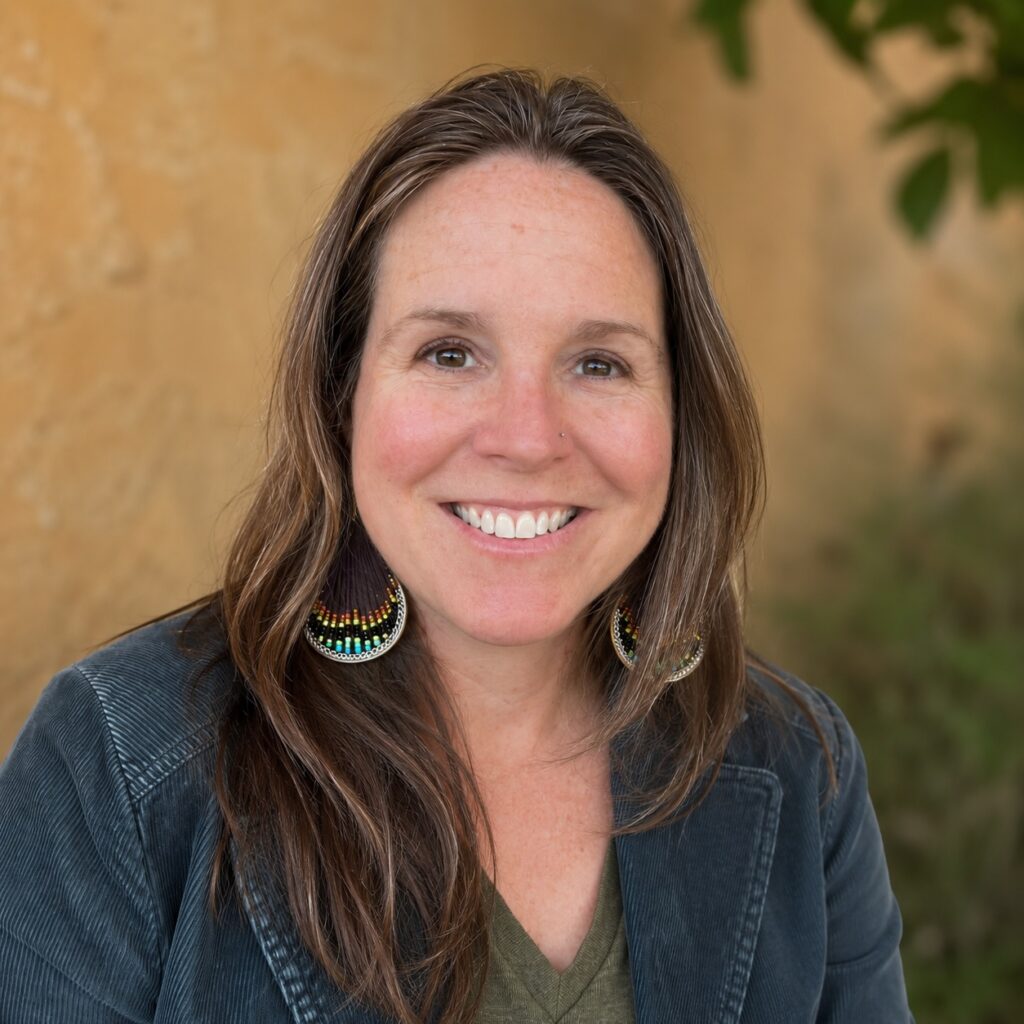
Karen Tuerk
Education
- B.S. Environmental Science, Western Washington University
- M.S. Marine Biology, College of Charleston
Teaching Interests
I like getting students to notice something simple: the environment shapes how we live, and how we live shapes the environment right back. That feedback loop is everywhere in cities, where water, air, and soil quality have a direct line to community health.
My courses cover how environmental systems work and change; natural processes, human impacts, what makes a community resilient. Mostly I want students to stop thinking of environmental science as a subject in the course catalog and start noticing it in their own lives.
Given the choice, I’ll teach outside every time. Regional parks, local streams, even the occasional trip underground. Fieldwork lets students experience the systems they are studying instead of reading about them on a slide.
Research and Scholarship
I do my best work in collaboration, usually asking some version of the same question: how do human activities shape ecosystem health? I started out in marine and estuarine systems, tracking how contaminants move through water and turn up in places you wouldn’t expect.
In grad school, I worked with the National Marine Mammal Stranding Network and the National Institute of Standards and Technology, analyzing dolphin tissue for persistent organic pollutants. Finding pesticides and flame retardants in open-ocean predators was an alarming lesson in how far our choices travel.
Afterward, I joined the Land-Use Coastal Ecosystems Study (LU-CES), investigating how microorganisms respond to nutrient runoff near golf courses and residential developments, again asking questions about land use, water quality, and ecosystem function.
I currently work with Dr. Iyengar (Biology) and the City of Allentown on local stream health, bringing students, faculty, and community partners together to trace how everyday choices on our lawns and streets show up in the water running through our own neighborhoods. My research students also study soil health, working with The Seed Farm and Pennsylvania Sustainable Agriculture (PASA) to examine soil quality at local organic farms.
- Environmental Geology
- Environmental Science Independent Study/Research - Balancing Conservation a
- Environmental Science Internship - Wildlands Convervancy
- FYS: Just Climate
- Introduction to Environmental Science
- Introduction to Environmental Science Lab
- MUHLES Research Apprenticeship - Seed Farm Soil Testing
- Topics in Environmental Science
- Crossette Family Faculty Fellowship Award for International Research
- Recognition of Excellence in Mentoring Award
- Muhlenberg Summer Research, Course Development, and Scholarship Grants
- Muhlenberg Influencer Award
- Muhlenberg Bridge builder Award
- Mellon Community Engagement Grant
- Tuerk, K.J.S, and Iyengar, E.V.* (2024, Jan 3-6). “Assessing the health of an impaired urban stream: Collaboration by a college and local government.”[poster presentation] SICB Annual Meeting, Seattle, WA.
- Iyengar, E.V.* and Tuerk, K.J.S. (2024,Jan 3-6). “Aquatic ecology, education, and regulators: Seeking meaningful long-term monitoring collaborations.” .”[poster presentation] SICB Annual Meeting, Seattle, WA.