Asian Studies
Dive deep into a region with immense global influence.
Why Asian studies matters:
Asian cultures, histories, and innovations shape everything from global economics to local communities. With Asia playing an increasingly central role in politics, philosophy, technology, and the arts, the ability to engage with its complexity is essential for meaningful global dialogue and leadership.
How Asian studies is taught at Muhlenberg:
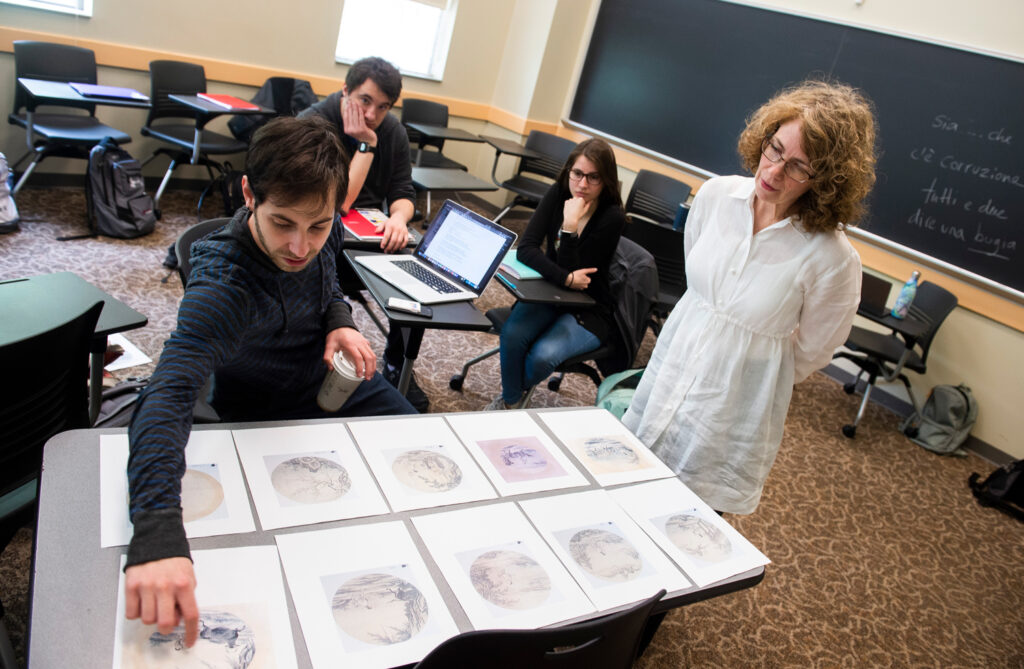
Asian studies at Muhlenberg is a multidisciplinary minor that draws on religion, literature, history, politics, and the arts. Students explore Asia through both classroom and co-curricular experiences, often pairing the program with study abroad, language study, or independent research. It’s a flexible, enriching path that deepens global awareness and complements any major.
- 93%of graduates begin a career or advanced studyBy six months after graduation
- 9:1student-to-facultyClassroom ratio
- Top 10%for ROIAmong all U.S. colleges and universities
- 91%retention rateMost Muhlenberg students return for their second year
Request Info
The Asian studies minor allows students to explore Asia through multiple academic lenses, with coursework spanning religion, history, politics, literature, and visual culture. Drawing on disciplines across the humanities, social sciences, and arts, the curriculum helps students understand Asia’s internal diversity and its global connections.
Students in the Asian studies minor often extend their learning beyond the classroom through immersive experiences like study abroad, independent research, and co-curricular events that explore Asian cultures and current affairs.
Short-term or semester-long study abroad programs give students the opportunity to engage directly with the languages, histories, and communities they study. On campus, lectures, performances, and student organizations offer additional ways to explore cultural traditions and contemporary issues across Asia and its global communities.
These experiences help students apply their learning in real-world contexts — building intercultural understanding, communication skills, and global awareness.

Powerful Outcomes
A Muhlenberg education sets you up for success. The liberal arts will hone your ability to think critically, communicate, and problem-solve, skills that are in high demand across all employment sectors.
Mules Making a Difference
Welcome, New Students!
Last week, Muhlenberg gained 415 academically-minded students from around the globe. This includes the Class of 2030 and transfer students.
Read MoreAthlete Pursues Summer Internship on Wall Street
Justin Mondestin (football, double major in finance and accounting) interned at CastleOak Securities, an investment bank in New York City.
Read MoreKatelen Estrada ’29 Interns With Civic Theatre of Allentown
Estrada, a theatre and education double major, was the production stage manager for two shows and worked with middle and high school students.
Read More